Eatweeds Press
Edible Seaweeds
Edible Seaweeds
Couldn't load pickup availability
Learn the Edible Seaweeds of Britain and Ireland
They're growing on your local shore. You just don't know they're food.
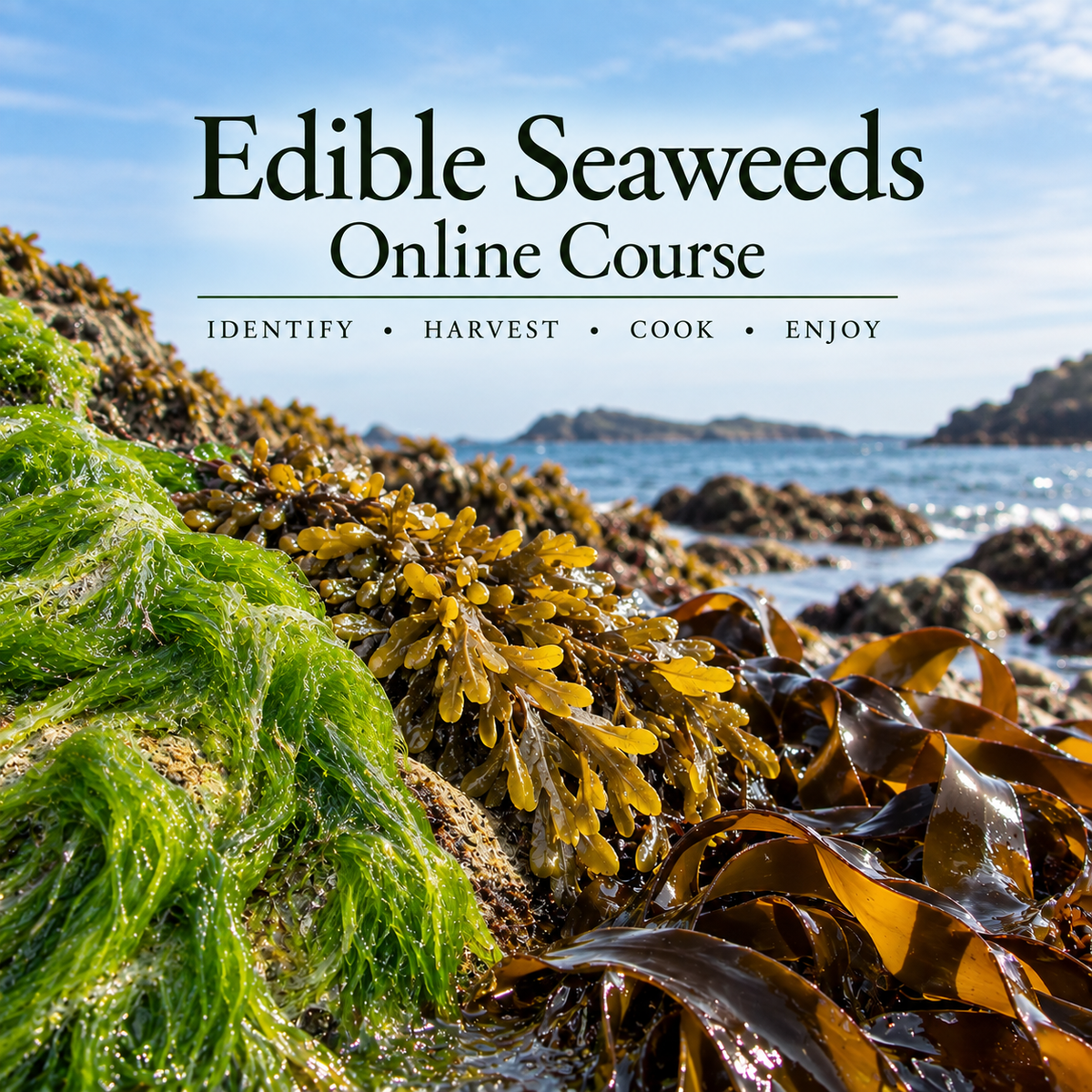
You walk past them every time you visit the coast. Brown ribbons clinging to rocks. Bright green frills in tide pools. Deep red tangles beneath the waves.
Seaweeds. They fed your ancestors for thousands of years. But somewhere along the way, we forgot.
The most nutritious food you've never learned to eat.
What's covered in this course
- How to identify 16 common edible seaweeds with clear photos and coastal videos
- When and how to harvest sustainably without damaging the ecosystem
- Traditional uses from coastal peoples across Britain and Ireland
- Modern nutritional science on trace minerals, gut health, and hormonal support
- Simple vegetarian recipes you can make with what you already have
- Safety notes on toxicity, contraindications, and responsible foraging
What makes this different
Most seaweed information comes from two places: wellness websites selling exotic imports, or academic texts that are hard to follow without a botany degree.
This course is neither.
It's practical coastal knowledge for people who want to learn what's growing on their local shore. Not theory. Not trends. Just clear identification, safe harvesting, and simple uses.
I've been teaching wild food foraging since 2008. I've spent decades walking Britain's coastlines, learning the edible and medicinal uses of plants and seaweeds—not from books alone, but from time spent outdoors, hands in rockpools, boots wet with tide.
This course is the distillation of that fieldwork. The kind of grounded learning you only get from doing it yourself, year after year.
Who this is for
This IS for you if:
- You want to start foraging on the coast but don't know where to begin
- You're drawn to the sea and want a meaningful way to engage with it
- You're a herbalist, cook, or gardener looking to expand your knowledge
- You prefer learning from field experience, not internet folklore
This is NOT for you if:
- You're looking for a quick shortcut or superficial overview
- You're not willing to learn proper identification before harvesting
What you'll get
- 16 detailed seaweed profiles - each with photos, videos, history, and uses
- Around 40 minutes of identification videos filmed on the coast (each 3-5 minutes long)
- Vegetarian recipes that work with ingredients you already have
- Written guides covering culinary, medicinal, and ecological context
- Safety notes on what to avoid and how to harvest responsibly
- 2 years access - watch on your phone at the beach or at home on your laptop
- 14-day money-back guarantee - request a full refund, no questions asked
What people say
"A highly readable, intuitive and comprehensive guide. The photos and videos enable you to appreciate what each seaweed looks like in different environments and maturity." — Sean Pickering
"The course is fabulous! I love the blending of clinical research and folk uses. Congratulations on a job well done!" — Ancel Mitchell
"A very good, professional production with a user-friendly layout and high-quality illustrations. Well worth the money." — Richard Meek
Join the course
When you learn to recognise the seaweeds around you, the coastline changes. You begin to see it differently.
One-time payment.
£29.95
About the author

Robin Harford is not a theorist. For over twenty years, he's foraged for his daily meals and has spent fifteen years teaching thousands of people to identify and gather wild plants safely. His field guide, Edible and Medicinal Wild Plants of Britain and Ireland, has sold over 65,000 copies and is used, mud-stained and dog-eared, by foragers and plant lovers across the country.
BBC Countryfile featured his foraging courses at the top of their recommended list. The Times listed his website in their top 50 for food and drink. He has conducted ethnobotanical research across four continents, documenting traditional plant knowledge from Southeast Asian jungles to remote parts of India and the African bush.
Robin is a member of the Society of Ethnobotany, the Botanical Society of Britain and Ireland, the Herb Society, and the Association of Foragers. He brings scientific rigour to traditional knowledge. His work has been featured on national television and radio, and in publications including The Guardian, The Telegraph and BBC Good Food.
He lives in Devon with his sweetheart, daughter nearby, and two grandchildren.