Eatweeds Press
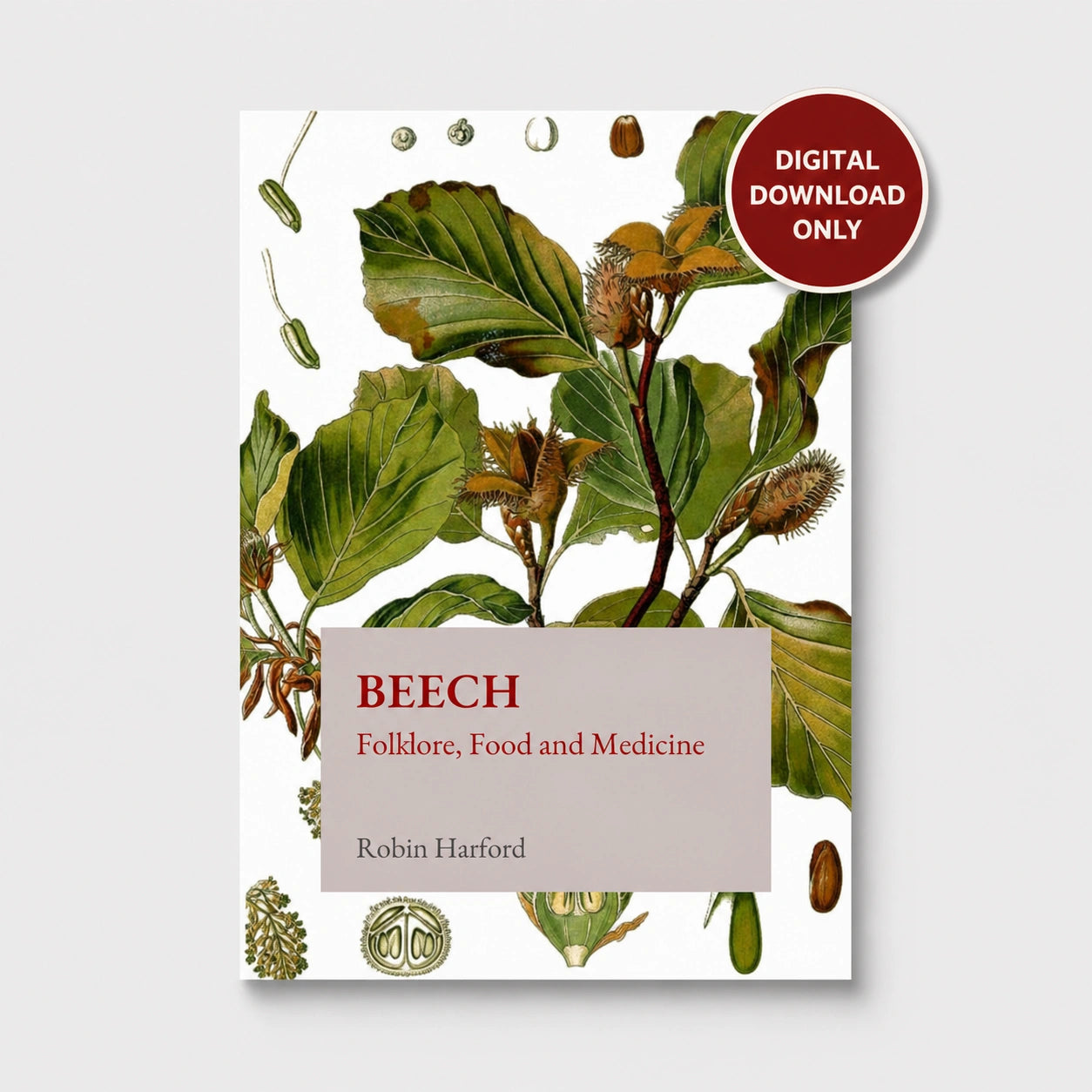
Beech: Folklore, Food and Medicine
Beech: Folklore, Food and Medicine
Couldn't load pickup availability
The word 'book' comes from beech. So does the German buch and the Dutch boek. Medieval writing desks were made from its wood, early books were bound in it, and Teutonic priests once carved runes into its bark and read the future in the wind through its leaves. Long before anyone wrote anything down, the beech was already a tree people listened to.
Robin Harford, founder of Eatweeds and an ethnobotanical researcher whose foraging courses have been recognised by BBC Countryfile as among the finest in the UK, has spent more than two decades travelling across Africa, India, South-East Asia, Europe and the United States documenting how people actually use wild plants — not the sanitised version, but what survives in old recipes, folk remedies and country memory.
In Beech, he gathers the tree's story from oracle to orchard. You'll discover:
- Why the beech was sacred to Thor, consulted for omens, and carved with runes for divination
- How to turn beechnuts into toffee, a coffee substitute, or a pressed oil once treasured across France
- The old Chiltern recipe for noyau, a beech-leaf liqueur once steeped by chair-makers with leaves to spare
- What herbalists from Gerard to Culpeper prescribed beech leaf, bark and mast for, and what modern research is now finding in the tree
- How to brew aged autumn leaves into a beech tea reminiscent of a fine Japanese sencha
Few trees have given so quietly for so long. Beech has fuelled ovens, furnished kitchens, fed the hungry through hard winters, flavoured beer and cheese and gin, and still found room to be sacred — an oracle, a ward against witches, a keeper of oaths. It's a tree that rewards the kind of looking most of us have stopped doing.
Go and find one. See what it has to say for itself.
| Author: | Robin Harford |
| Pages: | 31 |
| Book Format: | PDF + ePub |
| Dimensions: | A4 |
Price
£4.95
Share